
A Massive Content Rebuild for a Humble Ministry Vision
01How It Started: A Brand Focused on Jesus
Q:
So Aaron, how did the Jesus Famous project first land on your desk?
Aaron:
Nate Holdridge, lead pastor of Calvary Monterey, reached out to me directly. He had seen the work I did for CalvaryChapel.com and knew it was the right direction for what he was envisioning.
And honestly, when I heard the name Jesus Famous, I was already in.
But what really struck me, what told me this was a soul-aligned project, was the posture Nate took. He had years of faithful blogging, years of sermons, teachings, book writing. But instead of building NateHoldridge.com, which would’ve been totally reasonable, he wanted to keep the brand focused on Jesus.
That tells you everything you need to know about Nate. And it set the tone for the whole build.
02Big, Bold, Confident Design
Q:
How did that shape your design instincts right off the bat?
Aaron:
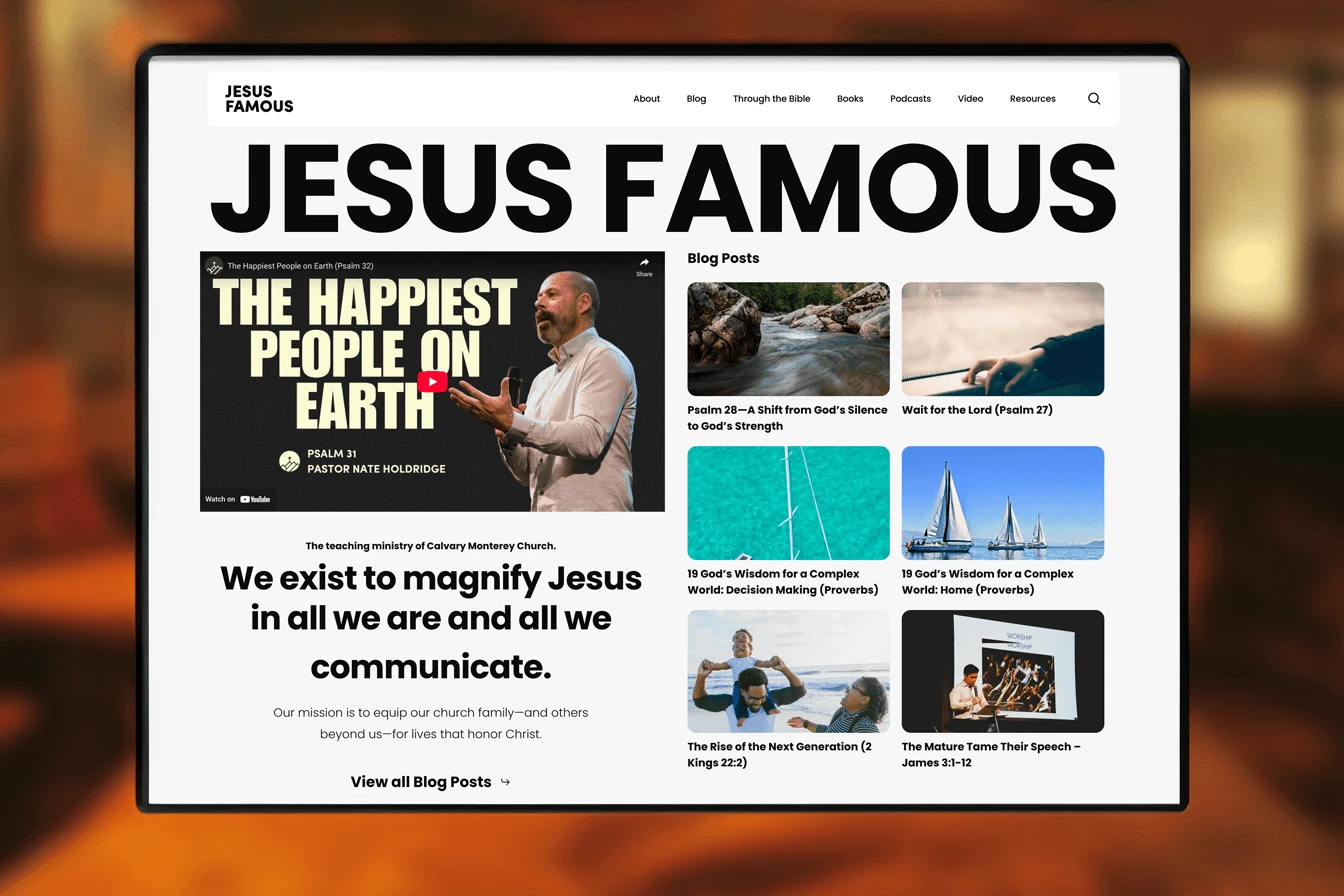
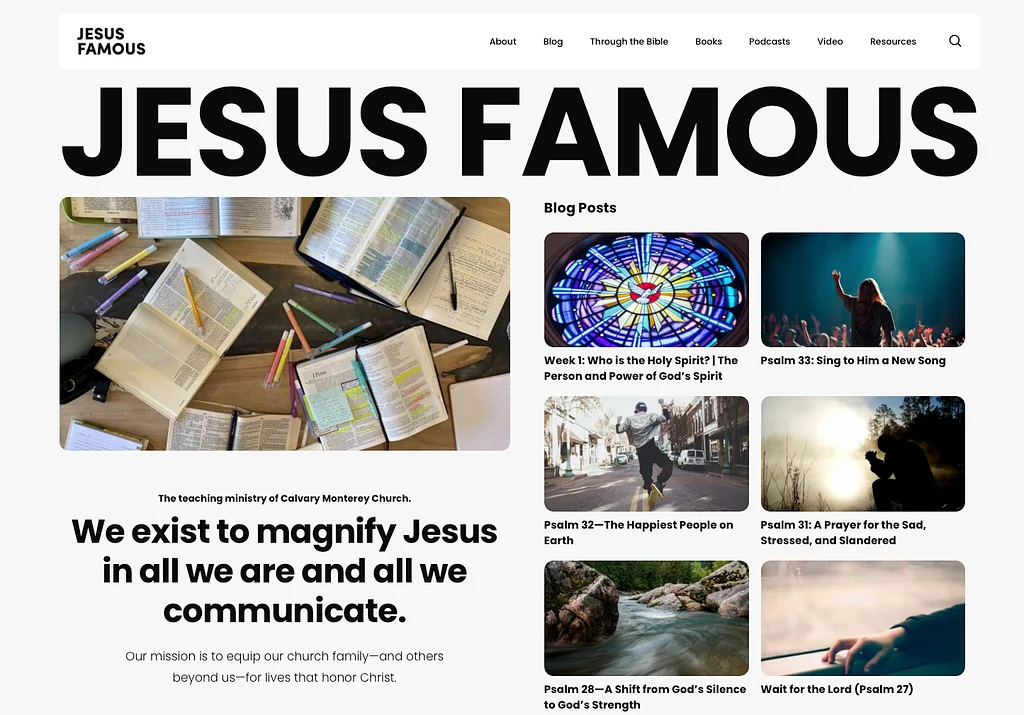
Well, first off, big, bold type. If you’re going to call the site Jesus Famous, you can’t show up with dainty body copy and timid visuals.
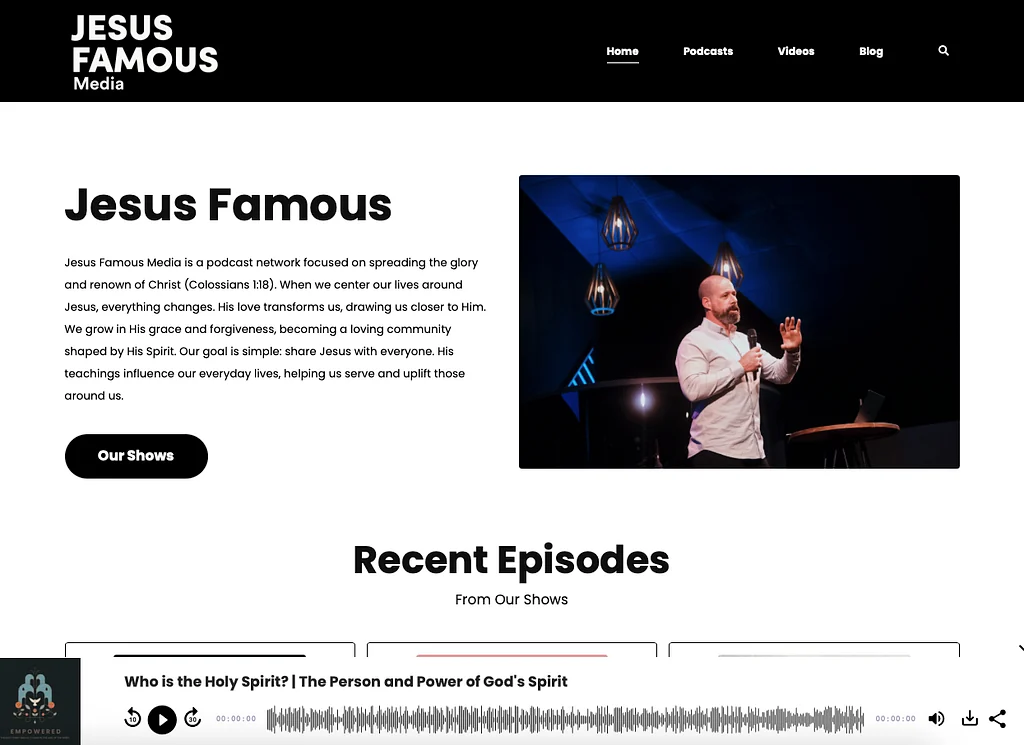
I wanted the homepage to announce itself.
We went for a stark, clean contrast design. White background, heavyweight black type, carefully spaced blocks of content.
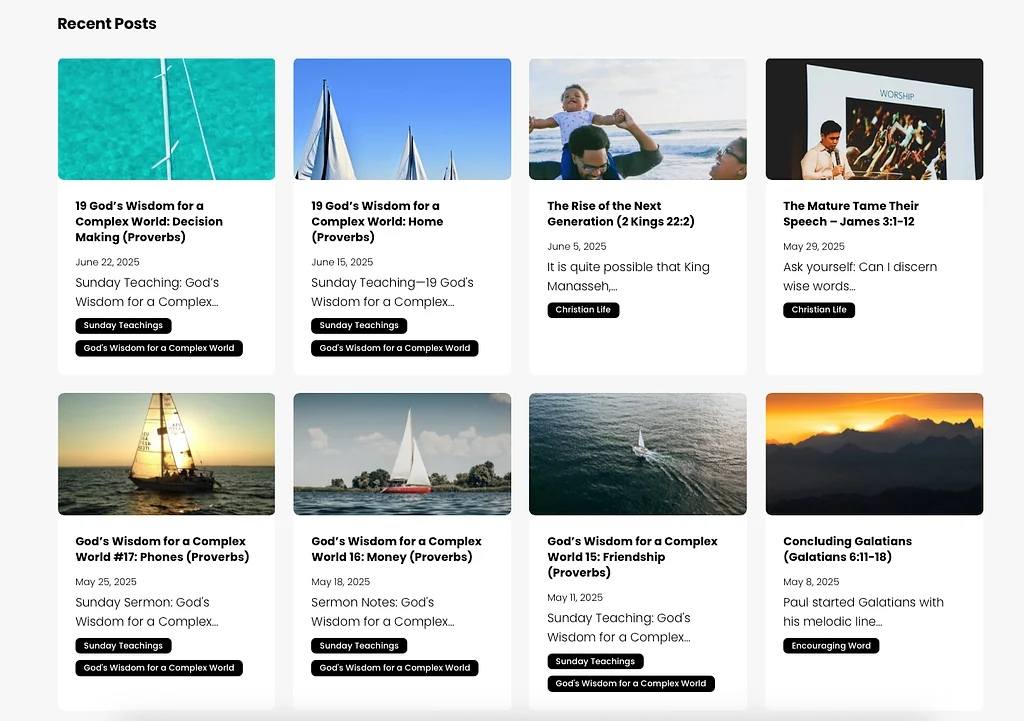
Minimal but not empty. It’s confident. Purposeful. Almost like if a theological journal and a modern media brand had a baby.
But more importantly, I knew we needed to build a system that could contain years of work, and future-proof it for the next decade.
03The Problem: Years of Teaching, Buried
Q:
What was the main problem you were solving?
Aaron:
Content sprawl and obscurity.
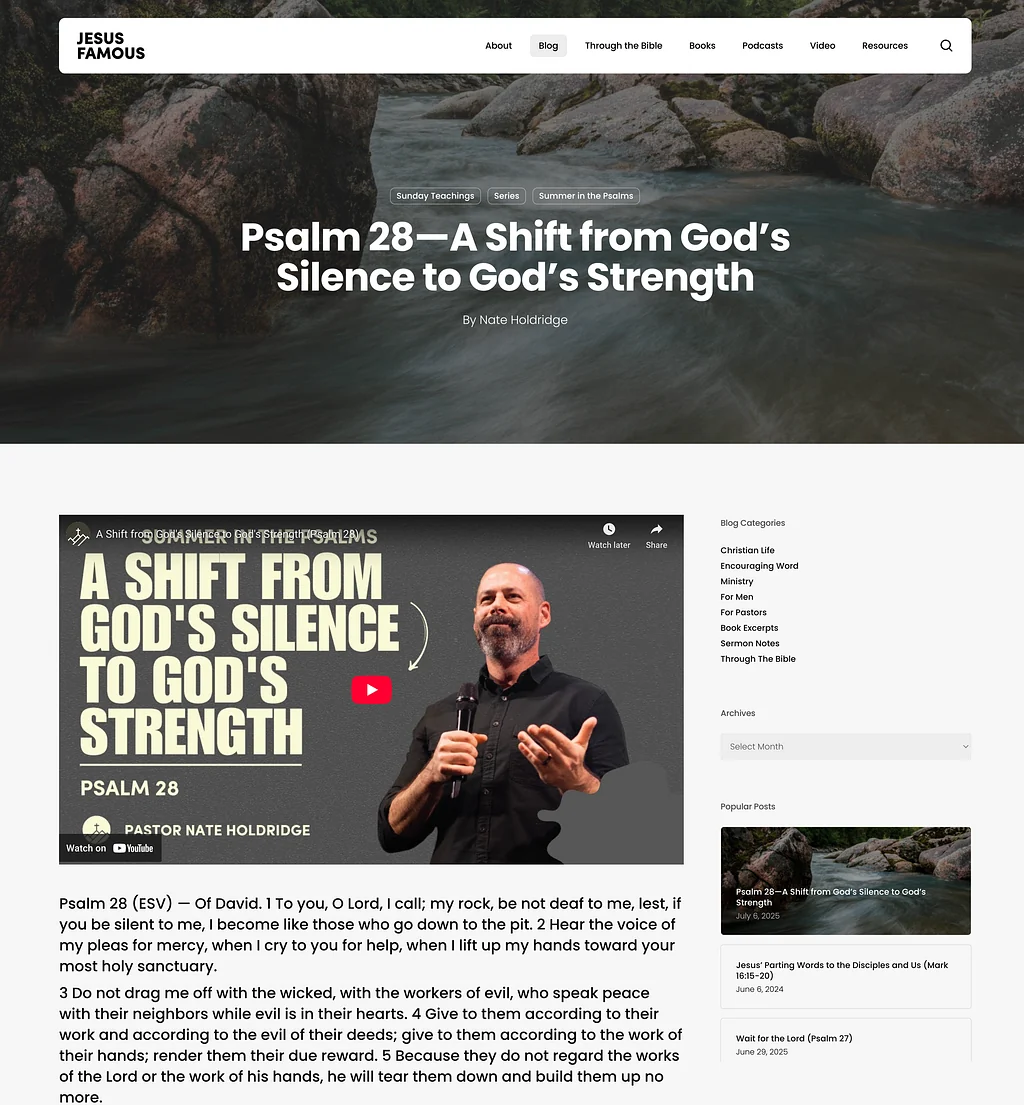
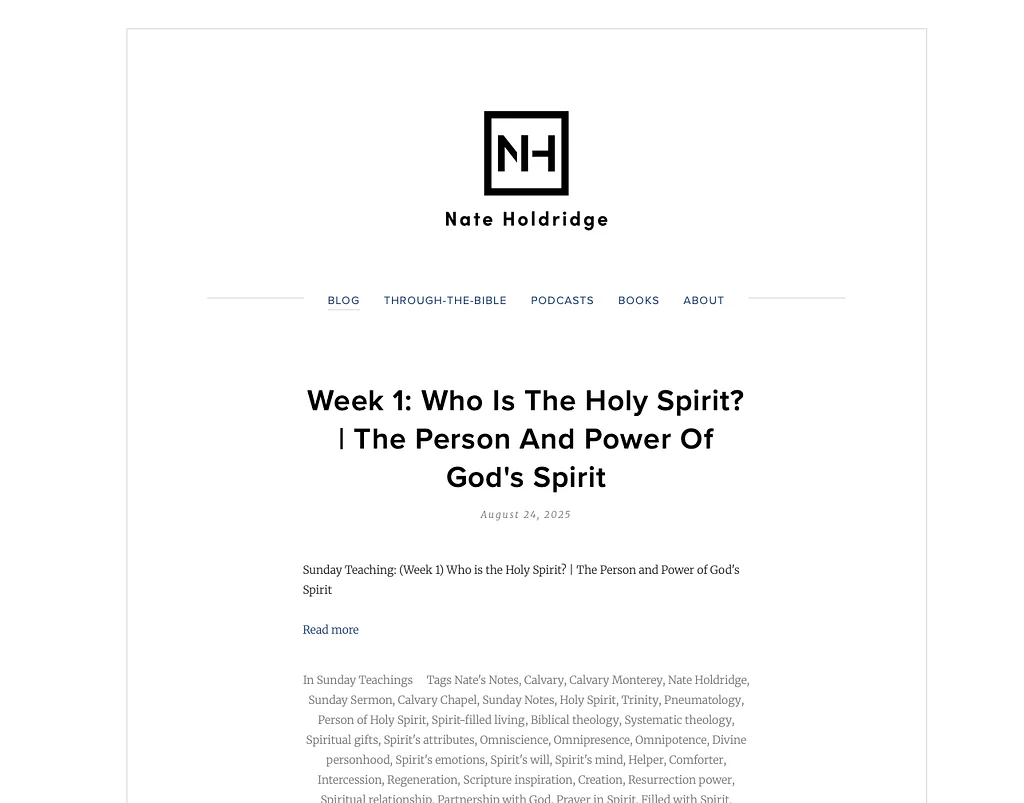
Nate had faithfully written for years, but all of it was buried on a Squarespace site that didn’t use categories or filters.
No collections, no tagging system, no real archive structure. It was just a long scroll of content that most people would never make it through.
Here, take a look at the old design.
Q:
Wow… that must have been frustrating to have so much content written, but to have it trapped on the wrong architecture.
Aaron:
Exactly.
So the challenge was twofold:
- Architect a new system that surfaces all this content beautifully.
- Migrate hundreds of posts, sermons, and book references from Squarespace, a platform that, historically, doesn’t play nice with WordPress.
It was digital archaeology. Four months of it.
04The Book Shelf: A Digital Library
Q:
Tell us about the book section. That’s a standout.
Aaron:
Yeah, that was one of my favorite parts. Nate’s books have blessed a lot of people, including me.
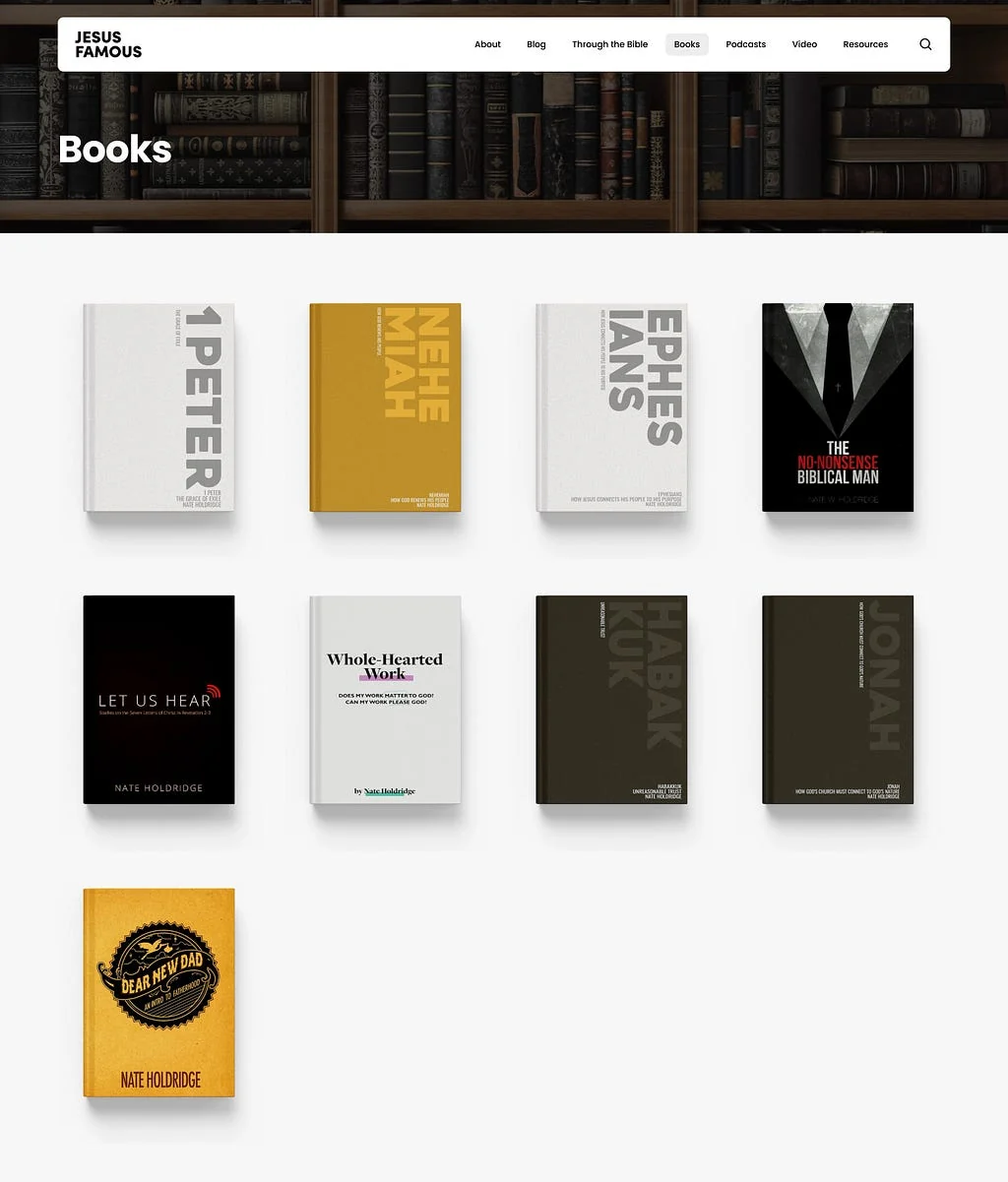
So I took a page out of John Mark Comer’s site and laid them out like a digital library shelf.
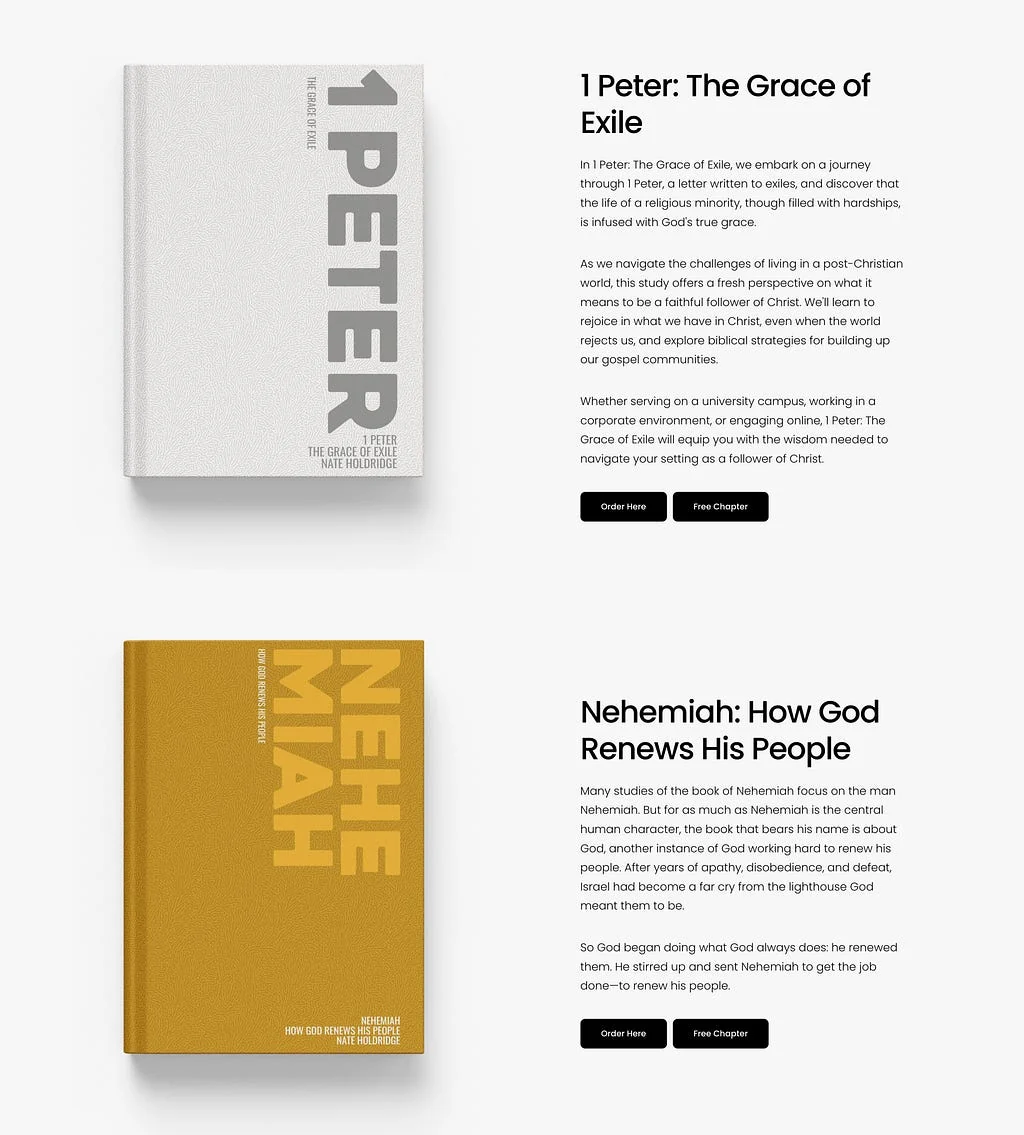
We created clean, high-contrast mockups of each book cover. I didn’t want them to just be Amazon links buried on a “Resources” page.
These deserved their own moment.
Each cover opens up into a custom panel with a summary and links to buy or read online.
It gives weight to Nate’s publishing work and helps discipleship resources feel tangible, browsable, and beautiful.
05Content Architecture: Many Ways In
Q:
This is more than just a blog. Walk us through how you approached content architecture.
Aaron:
Exactly, this isn’t a blog. It’s a platform. That distinction was everything.
So we treated it like a media brand.
Think The Bible Project meets Christianity Today, but local-church powered.
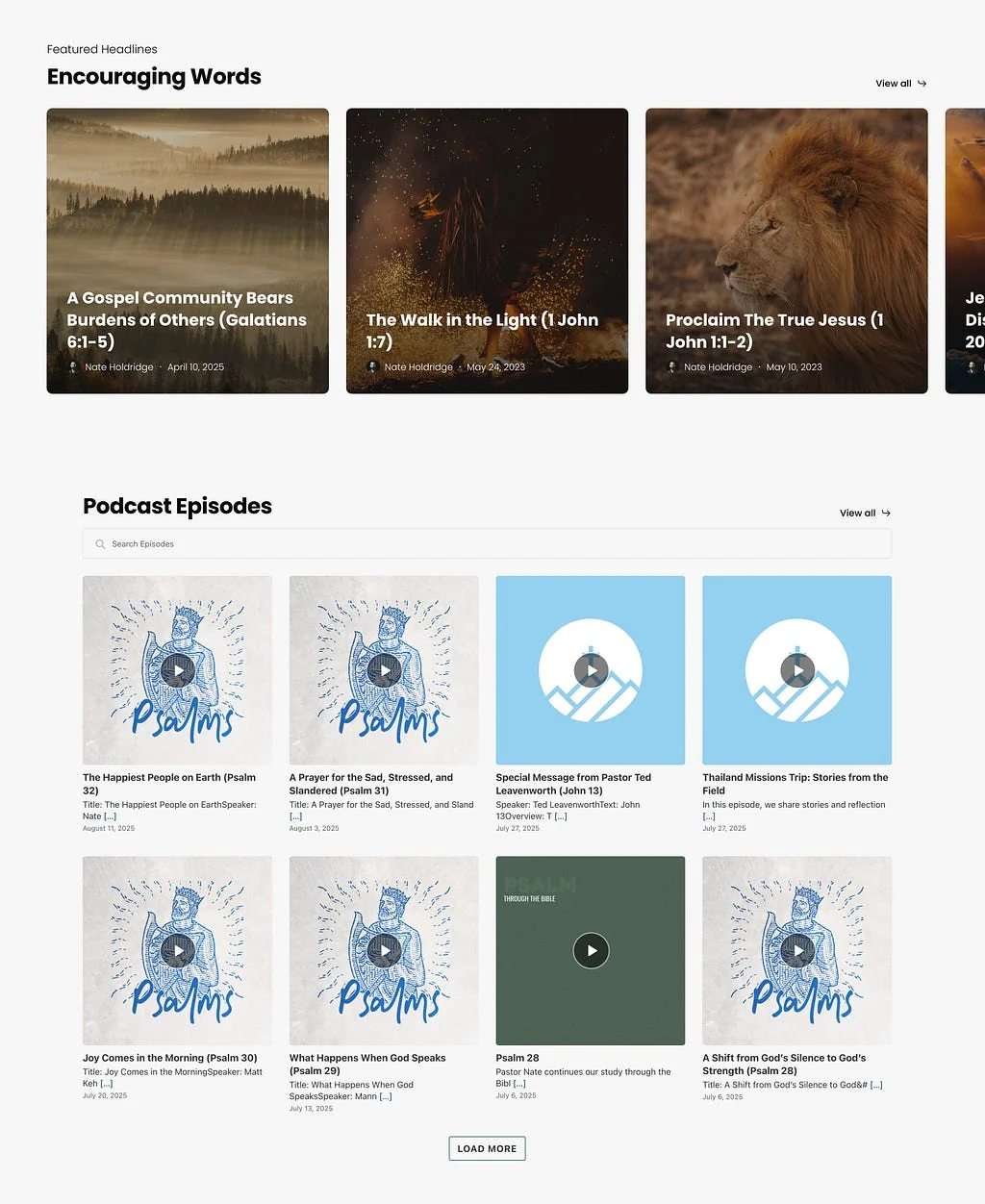
The goal was to elevate what was already there, not bury it under more content. That meant a menu-like homepage, where each section represents a different flavor of spiritual formation:
- Blog Posts
- Teaching Series
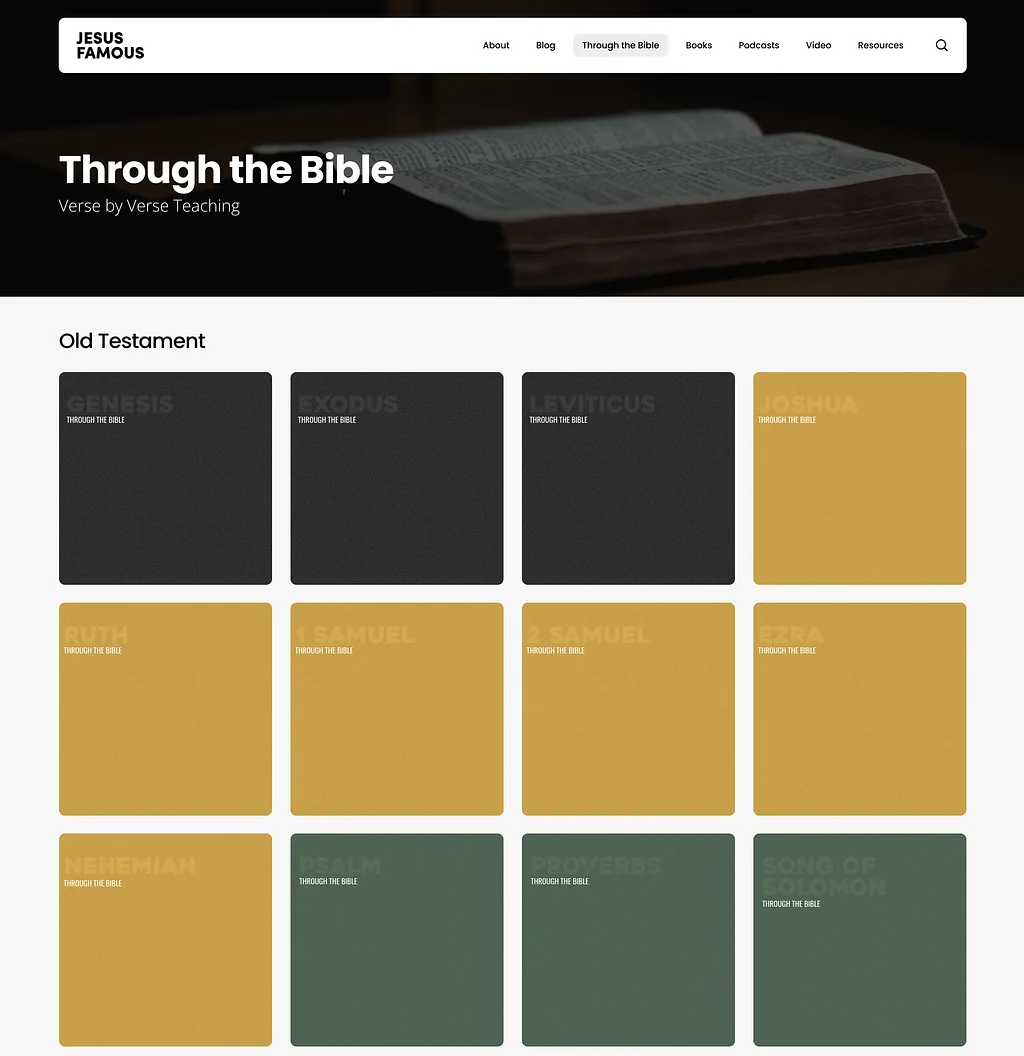
- “Through the Bible” Verse-by-Verse Library
- Podcast Episodes
- Video Teachings
- Books
- Sermon Notes
- Resources for Pastors
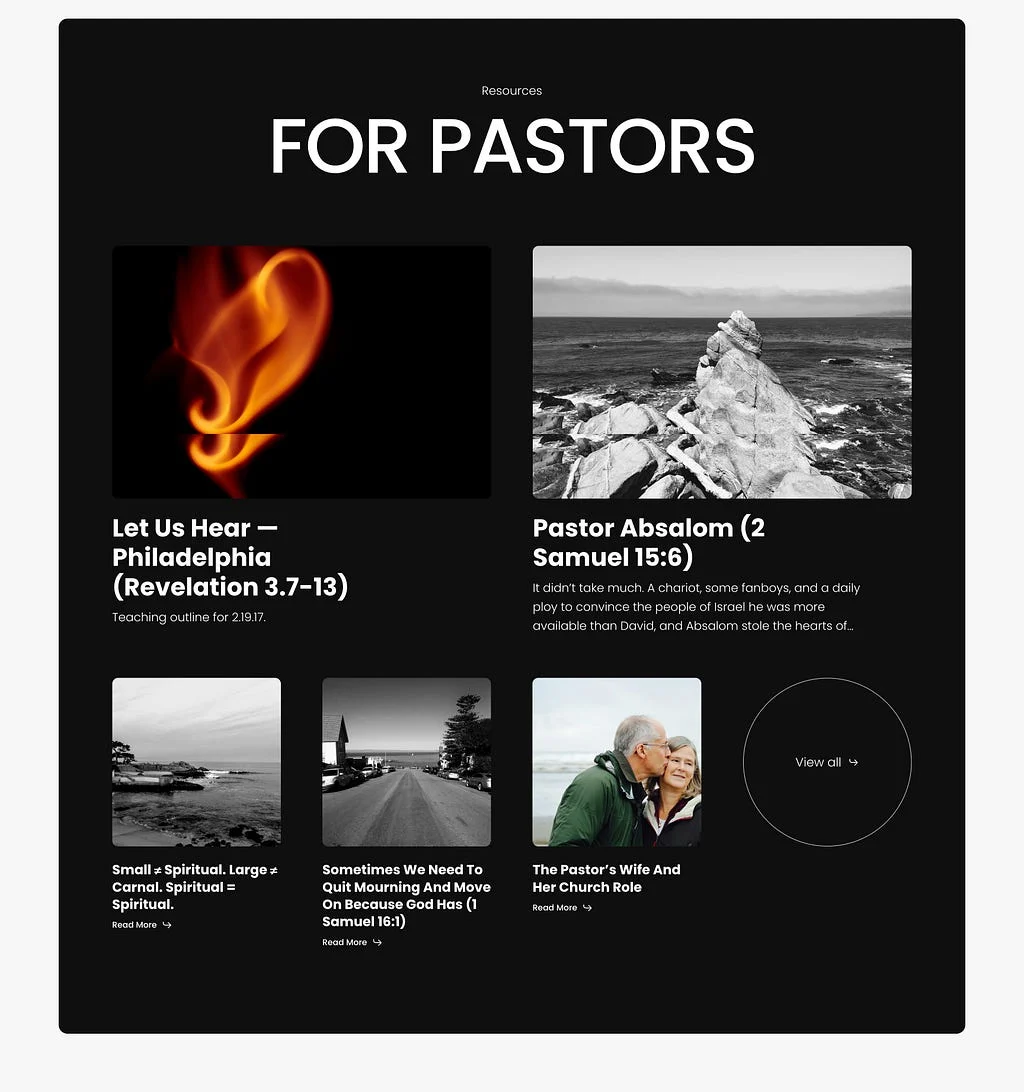
Every section of the homepage pulls recent entries from one of those categories. But each section also gives you a button to dive deeper.
“See all posts on this topic.” “Explore the full library.”
That’s the restaurant menu analogy. You get the sampler up front… but there’s a feast behind each door.
06Two Websites and a Custom Media Engine
Q:
Let’s talk about the tech and the backend. Because this wasn’t just one website, right?
Aaron:
Right. We actually built two websites. :)
One is the main Jesus Famous site, the blog, the books, the teachings, the content hub.
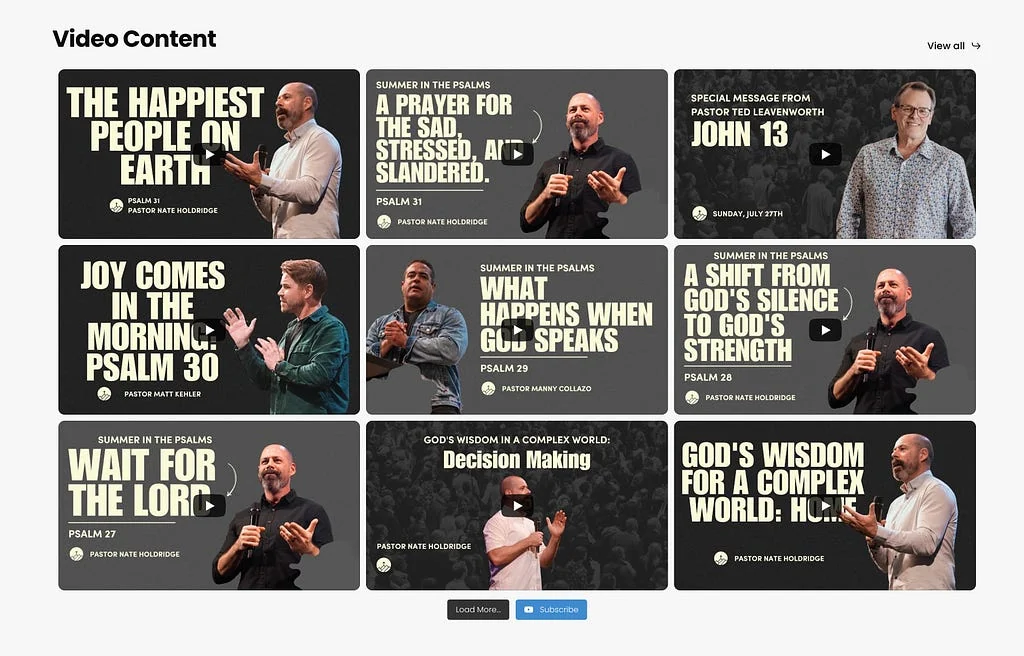
The other is a custom media engine that automatically pulls in podcast episodes via RSS feeds and video sermons from their YouTube channel.
So the church staff doesn’t have to manually update every time something goes live.
It all flows into a beautifully styled archive with filters, categories, and mobile optimization.
This is what I built for the GoodLion Podcast Network.
And for CGN Media.
I know the pain of managing scattered media. This solves it. It makes content searchable and makes content creation scalable and manageable for growing organizations.
07Connected Content and Sermon Prep
Q:
There’s a subtle depth to the way content links together. Was that intentional?
Aaron:
Absolutely. We added logic to recommend related content at the bottom of blog posts. We grouped sermons into teaching series and categories.
We gave the user multiple entry points into the ecosystem.
Because discipleship isn’t linear. People don’t just read one article, they wander.
We made it easy to wander with purpose.
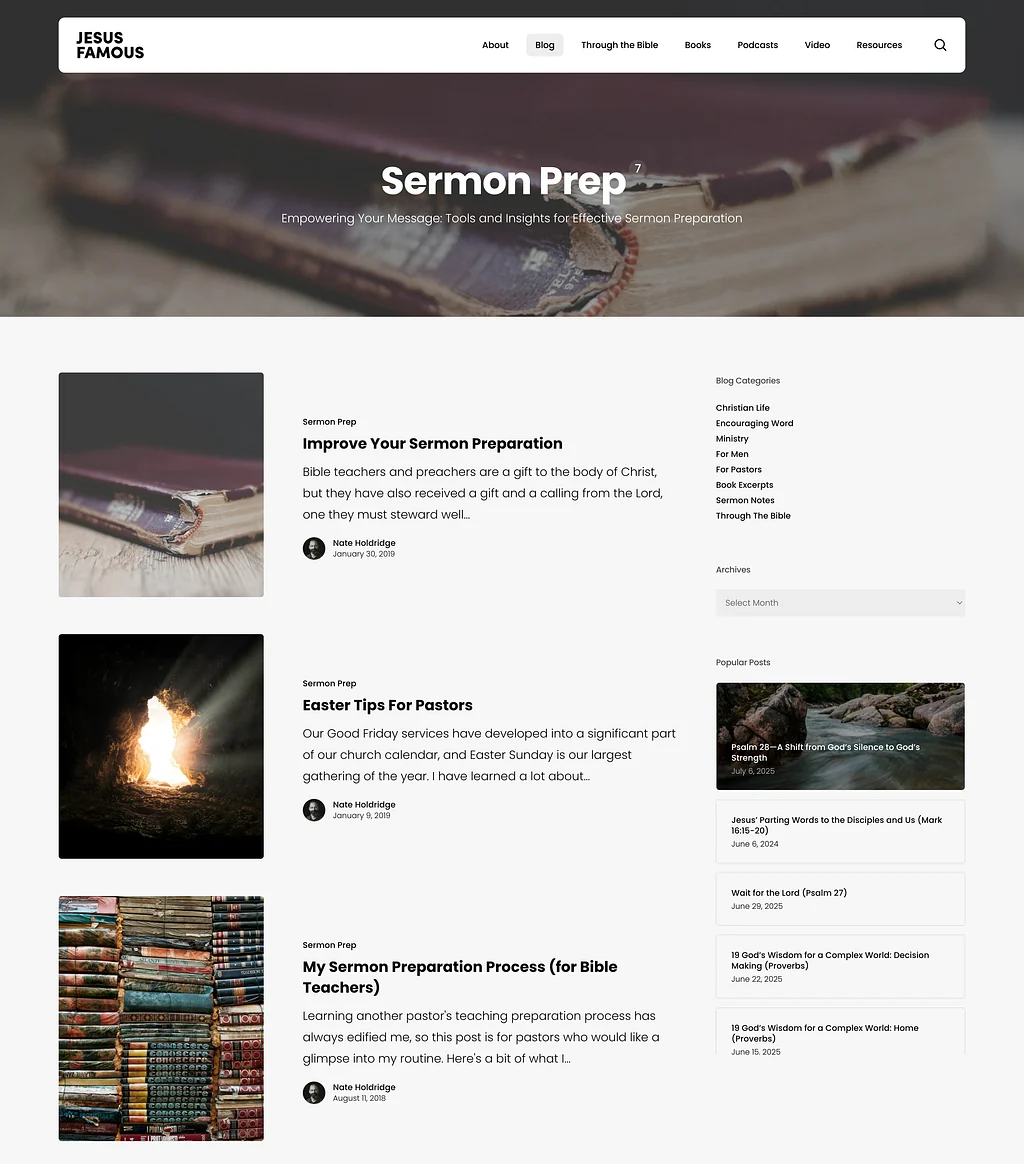
And for pastors, we created a whole “Sermon Prep” section, where Nate shares his actual process, reflections, and rhythms as a Bible teacher.
That’s huge. It’s rare for a pastor to pull back the curtain like that. We wanted to honor it with design that feels inviting and intelligent.
08Built to Last
Q:
What are you hoping this site does, beyond clicks and views?
Aaron:
I want this site to be the kind of foundation built to last for decades, not something that needs to be completely rebuilt every 2 years because the theme gets outdated.
It’s not flashy. It’s not hype.
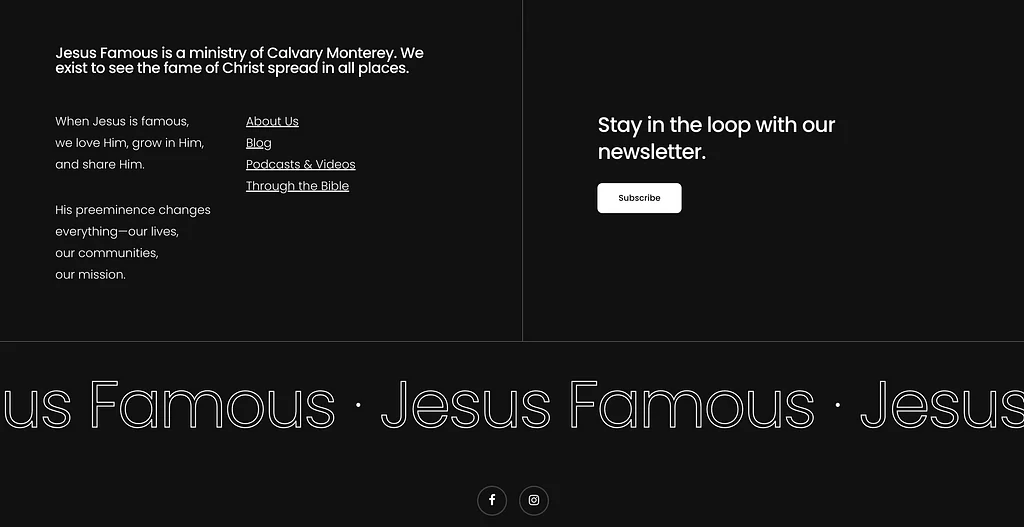
It’s a clean, minimal, beautiful, trustworthy, high-quality, spiritually useful platform that could serve believers for years.
People looking for wisdom, hope, clarity, whether they’re new to Jesus or thirty years in, they’ll land here and go: “This… feels anchored.”
And that’s the dream. A platform that helps make Jesus famous… without ever making us the main character.
Q:
Final thoughts?
Aaron:
This was one of the most meaningful builds I’ve ever done. Not just because it was complex or pretty, but because it felt right.
Nate’s humility, the depth of his work, the timelessness of the message… we just had to build something worthy of it.
I’m eternally grateful for the opportunity to build something like this, and my hope is I find others who want to build similarly beautiful, useful, and impactful things.
Strategy, design, migration, and media architecture for Nate Holdridge.
This account describes the project at the time of writing; screenshots may differ from the current client site.